Translate

Showing posts with label Formula 3. Show all posts

Wednesday, 15 April 2026

1957 Cooper Mk XI

This is a photograph that I took at McLeans Corner during the Scratch Race for Formula 3 (500cc) Racing Cars at the Vintage Sports Car Club’s SeeRed meeting at Donington Park in May 2011.
Leading is Nigel Ashman in a 1957 Cooper Mk XI, closely followed by Richard Ellingworth’s 1954 Kieft F3.

Tuesday, 20 February 2024

1954 Cooper Mk VIII

This car competed in the 500cc Formula Three Cars class in the Historic Formula Junior Championship race at the Aston Martin Owners Club's Autumn Historic Car Races meeting at Oulton Park in September 1992.
It's the 1954 Cooper Mk VIII of Andrew Garner, one of the cars which dominated Formula 3 racing in the early postwar years. Many people found that the home-built cars with a 500cc motor cycle engine was an inexpensive way to compete in motor sport and Charles Cooper and his son John started to produce these cars in 1946, firstly for themselves but later making them for other people and eventually they formed the company that led to the Cooper Climax T51 with which Jack Brabham won the World Drivers' Championship in 1959.

Sunday, 6 February 2022

1955 Martin F3

This car took part in the 500cc Formula 3 race that ran alongside the Historic Formula Junior Championship race at the Aston Martin Owners Club's Autumn Historic Car Races meeting at Oulton Park in September 1992.
It's the 1955 Martin F3 car of Reg Hargrave, but there's no other information about the car in the programme of the event. The website of the 500 Owners Association, however, tells you about Ray Martin and his cars, as well as many of the other marques that took part in this class of racing.

Wednesday, 11 August 2021

1950 Comet MkI F3

This was one of the competitors in the F3 500s race at the Vintage Sports Car Club's Formula Vintage meeting at Oulton Park in May 2019.
It's Duncan Rabagliati in his 1950 Comet MkI at Britten's chicane during the morning practice session. The Comet MkI was built by Brian Heyward and his father to replace an aged Cooper MkIV and it originally had a JAP engine, later replaced with a Norton unit. There's a 500 Owners Association site that has lots of details about the 500cc Formula 3 years, including details of the many different marques that were created for the Formula.
Here's the Comet at Druids Corner during the race.

Thursday, 29 October 2020

1950 Cooper Mk IV

I took this photograph at McLean's Corner during the Formula 3 (500cc) Racing Cars race at the SeeRed meeting at Donington Park in May 2011.

The leading car here is the 1950 Cooper Mk IV of Frederick Harper followed closely by the 1952 Mackson F3 500 of Gordon Russell. 

After the Second World War motor racing in the UK was slow to re-start, partly because of petrol rationing and the cost of running a suitable car. Home-built ‘specials’ powered by 500cc motorcycle were created to provide a reasonably cheap way means of getting involved in the sport. John Cooper and Eric Brandon, with the assistance of John’s father Charles, decided in 1946 to build two cars, and in 1947 in the second post-war race meeting to be held Eric Brandon won the first race to feature 500cc cars. In 1950 this 500cc class of racing was adopted by the FIA as a new Formula 3, and John and Charles Cooper went on to build a series of these 500cc cars, eventually graduating to Formula 2, then Formula 1 culminating in Jack Brabham winning the World Drivers’ Championship in 1959 and 1960 in the 2½ litre Cooper Climax.

The Mackson was one of three cars that were built in 1951 and 1952 by Gordon Bedson and 'Mac' McGee.

Saturday, 3 October 2020

1976 Van Diemen GRD 376

This was one of the competitors in the HSCC 'BP Ultimate' Classic Formula 3 Championship race at the Gold Cup meeting at Oulton Park in August 2008.
It's the 1976 Van Diemen GRD 376 of Matthew Sturmer. Van Diemen had taken over Group Racing Developments, who produced Formula 3 chassis, in 1975 and the GRD 376 is based on the Group Racing Developments 375 with improved aerodynamics. Formula 3 cars in that period were limited to 4-cylinder engines of no more than 2,000cc, but the programme of this event doesn't specify what make of engine Matthew Sturmer's car has.

Thursday, 20 August 2020

1952 Jason 500cc F3

This car competed in the 500cc Formula 3 class alongside Formula Junior cars in the Historic Formula Junior Championship race at the Aston Martin Owners Club's meeting at Oulton Park in September 1992.
It's Roy Hunt's 1952 Jason F3 car, and it seems to be the only one ever made. It was built by Godfrey Messervy between July and November 1952, the name being taken from the initials of the months July, August, September, October and November. It has a conventional four tube chassis with double wishbone suspension at the front, and swing axle with rubber bands at the rear though this was very soon supplemented with coil springs. The original engine was a Triumph with twin plugs and fuel injection. Godfrey Messervy drove the car at a few race meetings, but had to give up his racing exploits due to business commitments - later becoming chairman of Lucas and president of the Society of Motor Manufacturers and Traders, and going on to receive a Knighthood. The car disappeared until the 1980s when it received a JAP engine and gave a good account of itself in continental historic racing events, then was acquired by Roy Hunt in 1989. One oddity about the car is the bulge towards the nose of the car just above the racing number, and a groove leading up towards the driver. The bulge contains the rev counter and the groove is to enable to driver to see it.

Wednesday, 25 October 2017

Kieft CK51 F3

I took these two photographs at the SeeRed meeting at Donington Park in September 2007.
It's a 1951 Kieft CK51 500cc Formula 3 car, and although there was a Formula Junior/Formula 3 race at the meeting this car isn't listed in the programme of the event, and I don't recall it taking part in the race. 
This is the car that Stirling Moss drove in the 1951 and early part of the 1952 season, later changing to a Cooper Mk VI. It was a time when many Grand Prix drivers would compete in the support races at Grand Prix meetings, with several taking part in the 500cc races.

Monday, 27 June 2016

500cc Formula 3 cars

I've shown previously photographs of Formula 3 cars of the 1950s, and here are some more, this time cars that took part in the HSCC Summer Race Meeting at Oulton Park in July 1992.
This is the 1955 Cooper Mk9 of John Turner
Here's the 1951 JBS of Richard Utley. The JBS was developed by James Bottoms & Sons from the Cowlan Special of R L Coward and Geoff Lang
.The 1952 Kieft of Rod Delves
This car is described in the programme of the event as B R Banyard-Smith's 1955 Cooper MkIV, but the MkIV was a 1950 model, and this looks more like the MkIX of 1955.

The website of the 500 Owners Association gives lots of information about the cars that took part in Formula 3 racing in the 1950s. Just click on 'Marques' in the list on the left-hand side of the 'Home' page.

Wednesday, 23 March 2016

Kieft F3

I've posted previous items about the 500cc Formula 3 racing cars from the 1940s and 1950s (type 'Formula 3' into the search box on the right) and here's another one from the HSCC's Historic Race Meeting at Oulton Park in June 2001.
It's Reg Hargrave's ex-Don Parker 1954 Kieft F3. Stirling Moss had a Kieft F3 at one point, and also a Cooper F3, but was beaten by Don Parker more than by any other driver. Statistically Don Parker was the most successful F3 driver of them all.

Tuesday, 16 February 2016

500cc Formula 3 Cars

I've featured the 500cc Formula 3 cars of the 1950 twice before, at a 1982 Oulton Park meeting on 2 April 2013 and at a 2011 meeting at Donington Park on 11 August 2015. Here are photographs of some more of the 500cc cars at that Donington Park SeeRed meeting in May 2011.
Rodney Delves' 1952 Kieft CK52
Sir John Chisholm's 1952 Arnott 500
George Shackleton's 1952 Cooper Mk VI
Neil Hodges' 1954 Cooper Mk VIII
Xavier Kingsland's 1953 Staride Mk III
Frederick Harper's 1950 Cooper Mk IV
Mrs Shirley Monro's 1950/51 Cooper Mk IV
Mark Palmer's 1956 Wishart Mk II
Roy Hunt's 1953/54 Martin 500
David Whiteside's 1953 Cooper Mk VII
Vernon Williamson's 1950 JP Prototype
John Turner's 1955 Cooper Mk IX
Nigel Challis's 1954 Cooper Mk VIII

More details of the cars, and all aspects of 500cc Formula 3 racing can be found on the 500 Owners Association website.

Tuesday, 11 August 2015

Trimax Monoposto

When I started watching motor racing in the 1950s one of the support races at each meeting was usually for 500cc Formula 3 cars. These were mostly Cooper or Kieft machines, but there was always a sprinkling of cars from other low production manufacturers, and one-off specials. The SeeRed meeting at Donington Park in May 2011 included a race for these 500cc cars with a sizeable entry list, amongst which was the car shown here.
It's the 1949 Trimax Monoposto, built by Spike Rhiandro and driven in this race by Duncan Rabagliati, and you can read the history of this car here. The car was designed to allow for engines of 500, 750, and 1,000cc to be fitted (hence the 'Trimax' name) and for the Donington Park race it used the JAP 497cc engine shown below.
Appropriately, it mirrored its debut performance in 1950 at Goodwood by coming to a standstill on the run-off area just past McLeans Corner on the first lap of the Donington Park race.

Tuesday, 2 April 2013

500cc racing cars - Formula 3 of the 1950s

When I first started watching motor racing at Oulton Park and Aintree in the mid-1950s most meetings included in the support races an event for the 500cc Formula 3 cars. These usually produced close and exciting racing and even the star Grand Prix drivers would frequently take part in the races. This is what Wikipedia says about the Formula:

'History
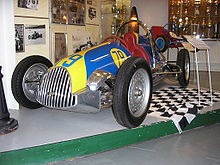

A typical early car, the Effyh 500 (1947–1952) was built in Malmö, Sweden and was one of the more successful cars. It had a lightweight tube chassis, aluminium bodywork and was powered by a 500cc JAP engine.
Formula Three (adopted by the FIA in 1950) evolved from postwar auto racing, with lightweight tube-frame chassis powered by 500 cc motorcycle engines (notably Nortons and JAP speedway). The 500 cc formula originally evolved in 1946 from low-cost "special" racing organised by enthusiasts in Bristol, England, just before the Second World War; British motorsport after the war picked up slowly, partly due to petrol rationing which continued for a number of years and home-built 500 cc cars engines were intended to be accessible to the "impecunious enthusiast". The second post-war motor race in Britain was organised by the VSCC in July 1947 at RAF Gransden Lodge, 500cc cars being the only post-war class to run that day. Unfortunately the race was a complete flop, as three of the seven entrants were non-starters, and, of the four runners, all but one were out of it in the first lap, leaving Eric Brandon in his Cooper Prototype (T2) trailing round to a virtual walk-over at the unimpressive speed of 55.79 mph, though his best lap (which was the fastest recorded for any 500) was 65.38 mph.
Cooper came to dominate the formula with mass-produced cars, and the income this generated enabled the company to develop into the senior categories. Other notable marques included Kieft, JBS and Emeryson in England and Effyh, Monopoletta and Scampolo in Europe. John Cooper, along with most other 500 builders, decided to place the engine in the middle of the car, driving the rear wheels. This was mostly due to the practical limitations imposed by chain drive but it gave these cars exceptionally good handling characteristics which eventually led to the mid-engined revolution in single-seater racing.
The 500cc formula was the usual route into motor racing through the early and mid 1950s (and stars like Stirling Moss continued to enter selected F3 events even during their GP careers). Other notable 500 cc Formula 3 drivers include Stuart Lewis-EvansIvor Bueb, Jim Russell, Peter Collins, Don Parker, Ken Tyrrell, and Bernie Ecclestone.
From a statistical point of view, Don Parker was the most successful F3 driver. Although coming to motor racing late in life (at age 41 in 1949), he won a total of 126 F3 races altogether, and was described by Motor Sport magazine (in his 1998 obituary) as "the most successful Formula 3 driver in history." Although Stirling Moss was already a star by 1953, Parker beat him more than any other driver, and was Formula 3 Champion in 1952, again in 1953, and in 1954 he only lost the title by a half-point. He took the title for a third time in 1959.
In 1954, Parker took on a young man named Norman Graham Hill as his mechanic and general assistant, and gave him his first taste of competitive motorsport in a 500cc car at Brands Hatch. Some years later, now using his middle name of Graham, this young man twice became Formula 1 World Champion (1962 and 1968).
Don Parker retired shortly after the 1959 season, having chosen not to move to Formula 2 or Formula 1, and thereafter raced only occasionally. However, he maintained his enthusiasm for fast cars, and in 1961 Jaguar built him a specially modified high-performance Mark 2 3.8 litre saloon. This car was reputedly the fastest Mark 2 ever built, having been tested at 140 m.p.h. on the recently opened (but still unrestricted) M4 motorway.
500cc Formula Three declined at an international level during the late 1950s, although it continued at a national level into the early 60s, being eclipsed by Formula Junior for 1000 or 1100 cc cars (on a sliding scale of weights).'
____________________________________________________________________________________________
Races for the 500cc cars are often a feature at Vintage and Historic car meetings and here are some photographs which I took at the Seaman Memorial Trophies meeting at Oulton Park in June 1982:
The 1954 Cooper Mk VIII of D Price

The 1951 Cooper Mk V of R Wright at Lodge Corner

The 1955 Cooper MK IX of J Turner, also at Lodge Corner. He seems to be taking an altogether more leisurely  approach than Mr Wright!